

Before the declaration of Martial Law in 1972, national and local elections in the Philippines were traditionally held in November. This was no coincidence. Having been an American colony from 1898 until 1946, the Philippines inherited many of its political institutions from the United States, including the timing of elections.
The 1935 Constitution, which inaugurated the Commonwealth of the Philippines, did not expressly require that elections be held in November. Rather, the Commission on Elections adopted the practice as a matter of administrative convenience and historical tradition, effectively synchronizing Philippine elections with the American electoral calendar. Consequently, candidates elected in November were proclaimed before the end of the year, and under the 1935 Constitution, the President and Vice President assumed office on December 30.
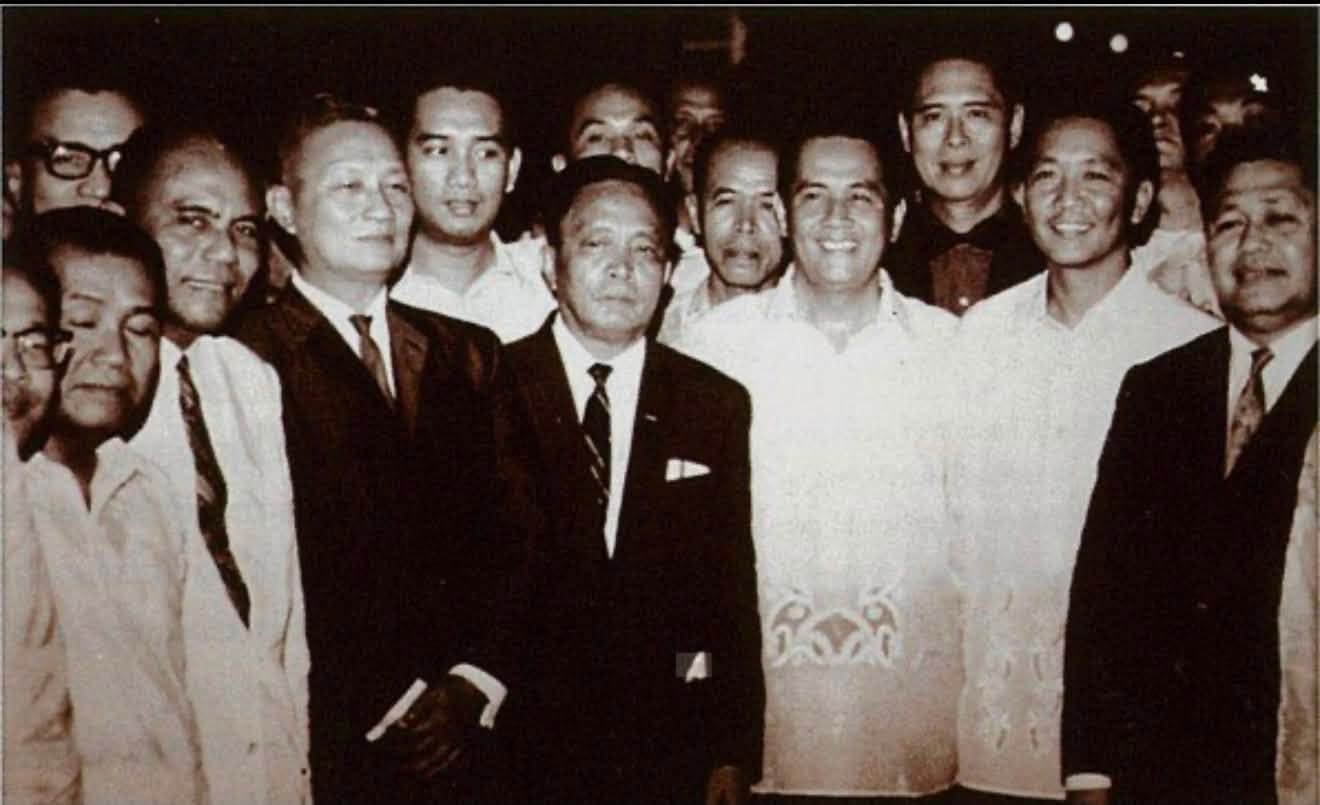
The declaration of Martial Law in September 1972 fundamentally altered the country’s political landscape. Regular elections were suspended and replaced by plebiscites and referenda called by President Ferdinand E. Marcos to secure public approval for constitutional amendments and major government policies. These exercises were generally held in May.
When parliamentary elections were eventually restored under the 1973 Constitution, the same timetable was retained. The Interim Batasang Pambansa elections in 1978 and the Regular Batasang Pambansa elections in 1984 were both conducted in May.
There were sound practical reasons for this shift. May falls during the dry season, making political campaigning easier throughout an archipelago of more than 7,000 islands. Roads are more passable, sea travel is generally safer, and public rallies are less likely to be disrupted by typhoons or heavy rains. Moreover, schools are on summer vacation and can readily be converted into polling places without interrupting classes. Teachers, who traditionally serve as members of the Electoral Boards, are likewise more available during the school break.
After the 1986 EDSA People Power Revolution, President Corazon Aquino promulgated the 1987 Constitution. The framers retained the May election schedule. Although the Constitution itself does not prescribe a specific month for elections, Congress subsequently enacted laws implementing the constitutional framework by fixing the date of regular national and local elections in May. Since then, the May election calendar has become a permanent feature of Philippine democracy.
The Omnibus Election Code, enacted during the Marcos administration, likewise survived the political transition. Subject to numerous amendments, it continues to provide the basic legal framework governing the conduct of elections, candidate qualifications, election offenses, and electoral procedures.
Another consequence of the 1987 constitutional framework is the synchronization of elections. The President and Vice President serve six-year terms without reelection. Senators serve six-year staggered terms, with one-half of the Senate elected every three years. Members of the House of Representatives, governors, vice governors, provincial board members, city and municipal officials, and barangay officials (subject to separate statutory schedules) generally serve three-year terms. This synchronized system necessarily produces national elections every six years and midterm elections three years thereafter.
When I entered politics in 1992 as a candidate for the Sangguniang Panlalawigan of Quezon Province, this electoral calendar had already become institutionalized. Preparations for the May 1992 elections began months in advance. During that period, the filing of certificates of candidacy was generally held early in the election year, giving the Commission on Elections ample time to determine the final list of candidates, print millions of official ballots, distribute election materials nationwide, and complete the countless logistical requirements attendant to a national election.
Looking back, the transfer of elections from November to May was not merely a change in dates. It represented the convergence of political necessity, constitutional transition, and administrative practicality. What began as an expedient during the Martial Law period ultimately became a permanent feature of the Philippine electoral system because it proved more suitable to the country’s geography, climate, educational calendar, and election logistics. Today, few Filipinos remember that November was once the traditional month for Philippine elections, yet that historical evolution illustrates how electoral practices can outlive the political circumstances that first gave rise to them.
Epilogue
The evolution of the Philippine election calendar demonstrates that electoral laws are shaped not only by constitutional theory but also by political experience and practical necessity. The November elections of the pre-Martial Law era reflected America’s institutional influence on its former colony. The shift to May during the Martial Law years was initially a matter of convenience, but its advantages in terms of climate, logistics, and the academic calendar became too compelling to abandon.
Ironically, one of the few institutional practices introduced during the Marcos period survived the restoration of democracy. The 1987 Constitution, despite repudiating the authoritarian features of the previous regime, retained the May election calendar because it had already proven to be more practical than the old November schedule. Congress later institutionalized this practice through Republic Act No. 7166, fixing regular national and local elections on the second Monday of May.
This illustrates an important lesson in constitutional development. Not every governmental practice inherited from a previous political regime is necessarily inconsistent with democracy. Institutions should be judged not by the identity of those who introduced them but by whether they continue to serve the public interest. The May election schedule has done precisely that. For nearly four decades, it has provided a stable, predictable, and efficient electoral timetable that has become part of the constitutional tradition of the Republic.
Constitutions may change, governments may rise and fall, and political leaders may come and go. Yet institutions that prove practical, efficient, and beneficial often endure beyond the circumstances that gave birth to them. The Philippine election calendar is one such institution—a reminder that history is not merely a succession of political upheavals, but also a gradual process of preserving what works while discarding what does not.