

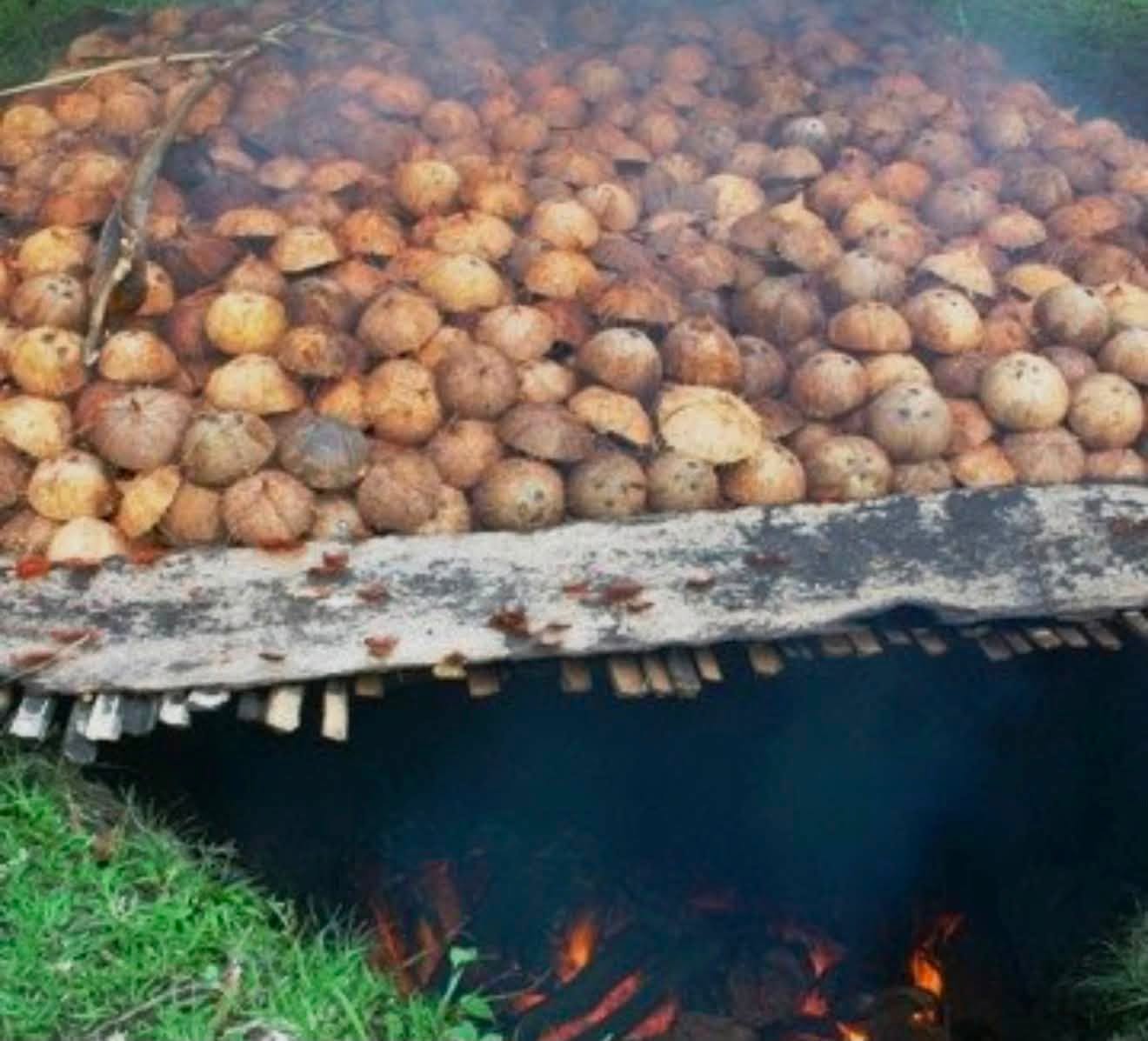
In the early decades of the 20th century, Quezon Province experienced what may aptly be called its Golden Age of Copra. Vast coconut plantations stretched across the fertile lands of Tiaong, Candelaria, Sariaya, and neighboring towns. Under American rule, the demand for copra—the dried kernel of the coconut from which oil is extracted—expanded dramatically as American industries sought a steady supply of raw materials for food products, soaps, cosmetics, and industrial lubricants.
American trading firms purchased enormous quantities of copra produced in Quezon. To facilitate the growing trade, oil mills were established in key commercial centers such as Candelaria and Lucena. These facilities processed coconut products in bulk before they were exported, particularly to California and other markets in the United States. The coconut industry became the economic backbone of the province, generating employment and creating substantial wealth for landowners and merchants.
Among the towns that prospered most was Sariaya, which emerged as one of the country’s foremost producers of coconut products. The prosperity generated by regular harvests gave rise to a class of affluent landowners and local elites, often referred to as caciques. Their wealth found expression in the construction of grand residences that still stand today as monuments to that era of agricultural abundance.
Foremost among these architectural treasures are the stately Herrera-Umali Mansion in Tiaong and the elegant Enriquez ancestral homes in Sariaya. Along with other heritage structures throughout the province, these mansions reflect the prosperity brought about by the coconut trade and remain enduring symbols of Quezon’s rich economic and cultural history. At Las Casas de Acuzar in Bagac, Bataan, one ancestral house from Mulanay, Quezon is on display in all its splendor. A marker tells us that the manor belongs to the Maxino Family.
The agricultural traditions established during the American colonial period continued even after the devastation of the Second World War. The continuation of preferential economic arrangements, including the parity rights granted to American citizens and corporations, ensured that the coconut trade remained closely linked to the American market. As a result, the copra industry continued to sustain the province’s economy for many years, preserving Quezon’s reputation as one of the Philippines’ premier coconut-producing regions.
For several generations, coconut was not merely a crop in Quezon—it was the foundation of local wealth, social prestige, and provincial identity. From the lowly niogan, families of old sent their children to college to finish medicine, engineering, and other professions enabling them to migrate abroad preferably the USA.
The grand mansions, old oil mills, and sprawling plantations that survive today serve as reminders of an era when copra was king and Quezon stood at the center of the global coconut trade.
Until Marcos Sr. created the coconut levy. Emmanuel Pelaez, who saw the ploy of monopoly, nearly died in an assassination try immortalizing his lamentation to General Karingal, “what’s happening to our country, General?”