

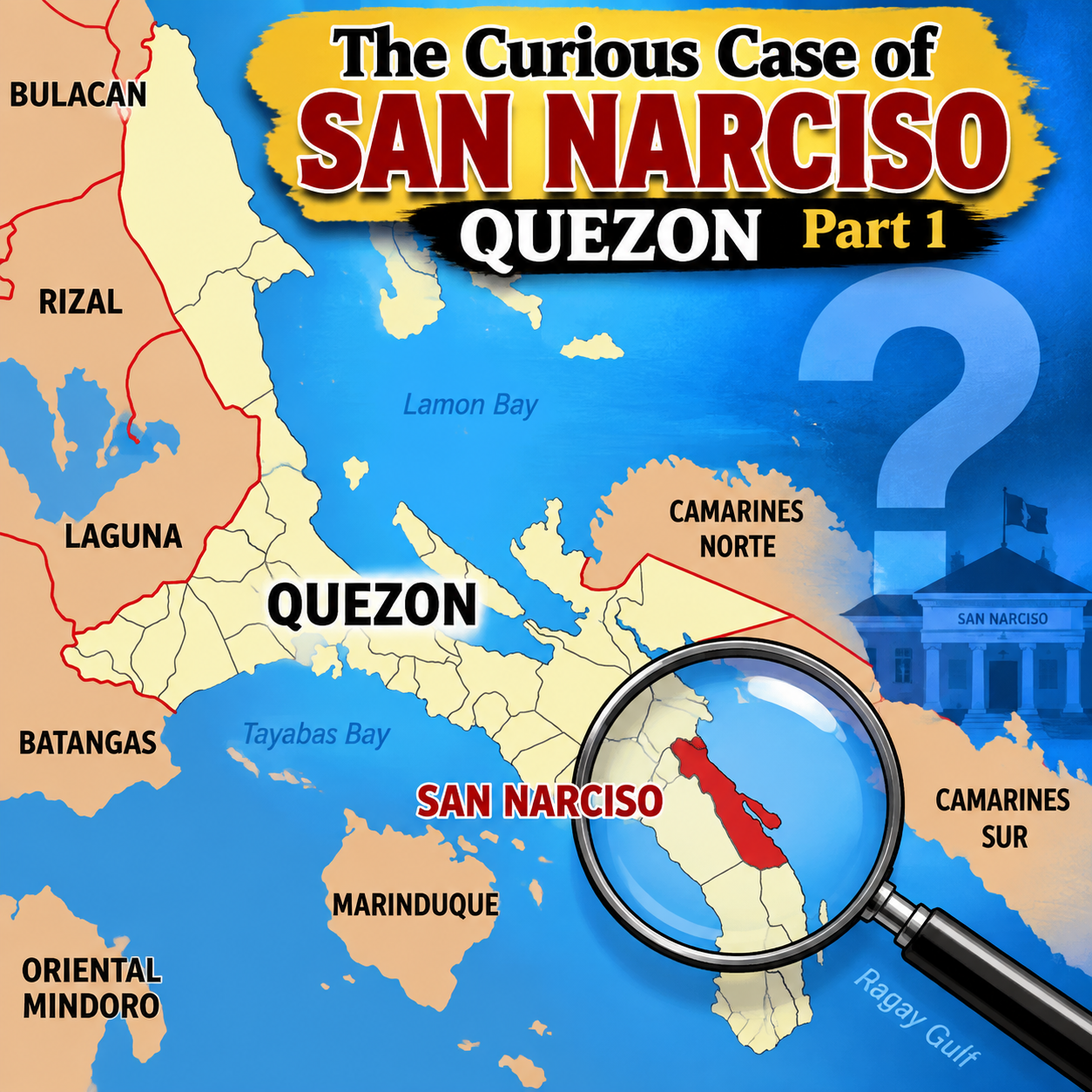
What happened in San Narciso, Quezon, deserves the attention of the Department of the Interior and Local Government, the Commission on Elections, the Office of the Ombudsman, and perhaps even Congress in its deliberations on the long-overdue anti-political dynasty law.
Florabelle “Pobel” Uy-Yap was elected mayor of San Narciso and, according to published accounts, won reelection in 2022 for what was described as her third consecutive term. Having reached the constitutional limit, she could no longer seek another consecutive term as mayor in 2025.
She accordingly ran for vice mayor. Her husband, Atty. Allan Yap, ran for mayor and won. Standing alone, this marital substitution did not violate the constitutional term limit. The Constitution limits the consecutive terms of an individual official. It does not presently prohibit a spouse, child, parent, sibling, or other relative from succeeding that official. That is precisely the loophole perpetuated by Congress through its continuing failure to enact the anti-political dynasty law commanded by the Constitution. But the story reportedly did not end with the husband’s election. Within months of his election in May 2025, Mayor Allan Yap reportedly resigned.
The circumstances surrounding that resignation have not been adequately disclosed to the people of San Narciso. Was the resignation prompted by illness, professional considerations, private business, an appointment to another government position, or some other compelling reason?
When was the resignation submitted?
To whom was it submitted?
When was it accepted by the Governor of Quezon? Was the DILG properly furnished with the required documents?
Under Section 82 of the Local Government Code, the resignation of a municipal mayor must be submitted to the provincial governor. If the governor does not act upon it within fifteen working days, it is deemed accepted. The DILG must also be furnished a copy.
Upon a permanent vacancy, the vice mayor succeeds as mayor by operation of law under Section 44. Thus, if Vice Mayor Florabelle Uy-Yap succeeded her husband, the succession may be technically lawful.
But technical legality does not answer the larger question: was the entire sequence an authentic response to unforeseen circumstances, or was it a carefully arranged method of preserving control of the mayoralty of San Narciso within the same family?
The distinction is crucial.
A succession obtained by operation of law is generally treated differently from a full term won by election. Under Borja, Jr. v. COMELEC, both election to the office and service of the full term are ordinarily required before a term is counted against the three-term limit.
This creates the disturbing possibility that a term-limited mayor may run for vice mayor, allow a spouse to run for mayor, and then return to the mayoralty through succession when the spouse resigns.
That may exploit a gap in the law without necessarily violating its present text. But it plainly offends the constitutional policy against the concentration and perpetuation of political power within a single family.
Editor’s Note: The publication provides this space as a venue for the free expression of ideas. The opinions, comments, and statements contained in this column are solely those of the author. The publisher, editors, and staff neither endorse nor assume responsibility for the views expressed herein and shall not be held liable for any claims arising from the contents of this article.